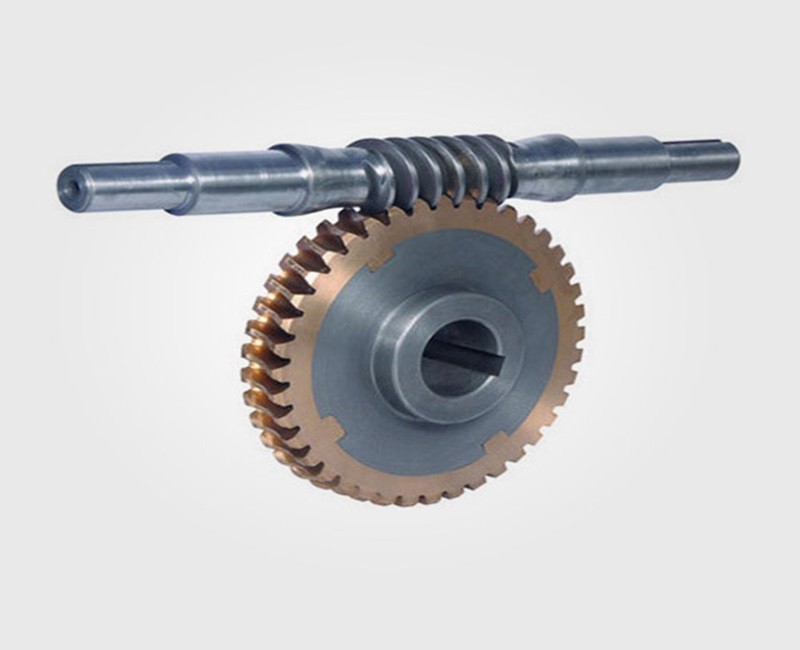
A worm shaft is a high-precision mechanical component used in worm gear assemblies to transmit motion and torque between non-parallel, perpendicular shafts. It works in combination with a worm gear to provide high torque reduction and smooth power transmission in industrial systems.Manufactured from high-grade alloy steel or hardened carbon steel, worm shafts are heat-treated and precision-machined to ensure excellent strength, wear resistance, and long service life. The threaded helical design allows efficient speed reduction with minimal noise and vibration.Worm shafts are widely used in gearboxes, lifting equipment, marble and tile processing machines, conveyors, and heavy-duty industrial machinery. They are designed for high load capacity, smooth operation, and reliable performance under continuous working conditions.
Material:
-
Alloy Steel (EN8 / EN19 / EN24)
-
Carbon Steel
-
Case-hardened steel (as per requirement)
Manufacturing Process:
-
Precision CNC machining
-
Thread grinding / hobbing
-
Heat treatment (case hardening / induction hardening)
Surface Finish:
-
Ground finish for smooth operation
-
Anti-corrosion coating / oil coating
Hardness: HRC 45 – 60 (depending on application)
Diameter Range: Customizable as per machine design
Length Range: Customizable (based on gearbox requirement)
Thread Type: Single / multi-start worm threads (custom design available)
Tolerance Level: High precision (±0.01 mm – ±0.05 mm)
Load Capacity: High torque transmission suitable for heavy-duty industrial machines
Speed Compatibility: Low-speed, high-torque applications
Features:
-
High strength and wear resistance
-
Smooth and quiet operation
-
Excellent torque transmission efficiency
-
Long service life under continuous load
-
Accurate meshing with worm gear
Usage/Application:
-
Marble cutting machinery
-
Tile polishing machines
-
Stone processing equipment
-
Industrial gear reduction systems
Our ceramic, porcelain, and vitrified tiles are manufactured under strict quality control and comply with international standards including ISO 9001, CE Marking, EN 14411, BIS (IS 15622 / IS 13755), CE Marking, EN 12057 / EN 12058 and ASTM standards.